Evaluating Seamless Pattern Floral Watercolor 70 for Professional Design Projects
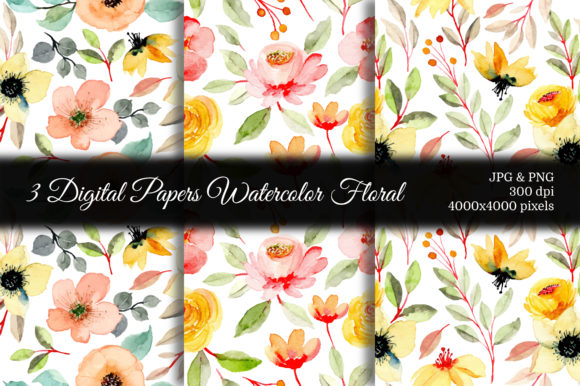
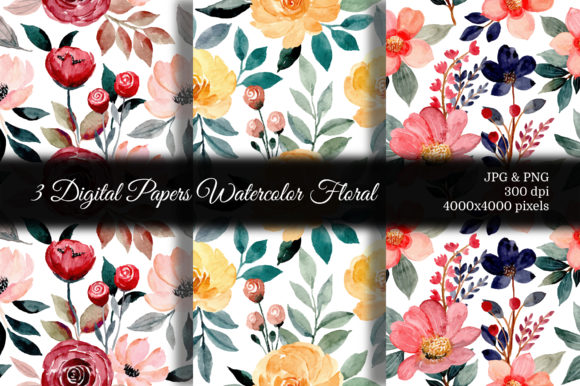
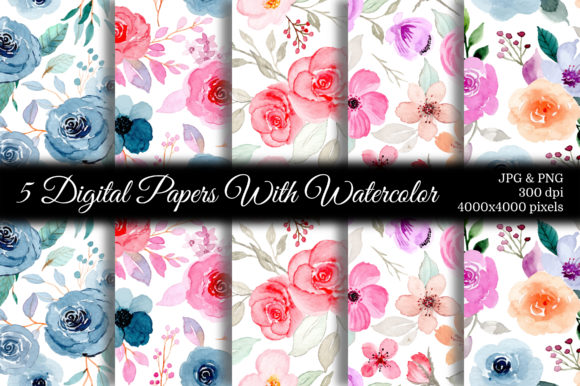
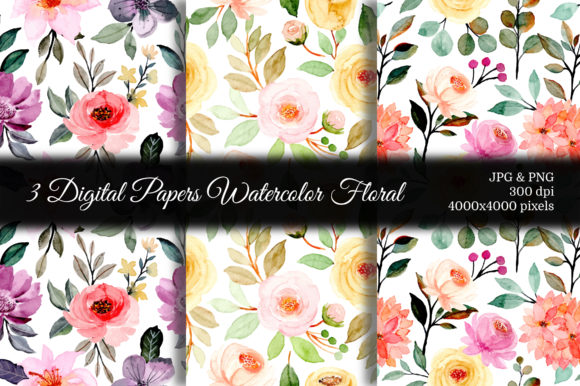
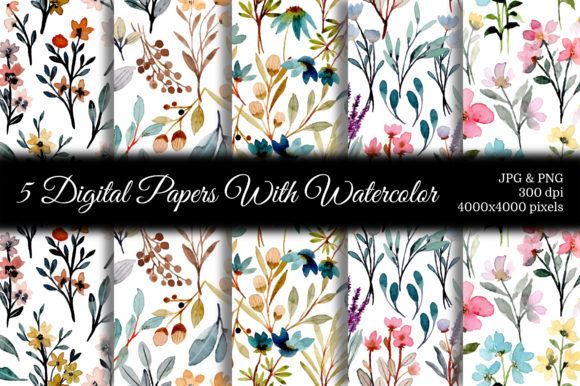
When sourcing digital assets for surface design, packaging, or web backgrounds, the distinction between a generic floral texture and a professionally graded resource often lies in technical specifications and versatility. Seamless Pattern Floral Watercolor 70 represents a specific tier of digital asset designed to bridge the gap between traditional artistic aesthetics and modern production requirements. Unlike standard stock imagery that may prioritize visual appeal over utility, this collection is structured around precise deliverables: five distinct designs provided in both JPG and PNG formats at 4000×4000 pixels and 300 DPI. Understanding these specifications is essential for designers comparing options for print-ready projects versus digital-only applications.
The primary value proposition of Seamless Pattern Floral Watercolor 70 is its dual-format delivery system. Many pattern libraries offer only flattened JPEG files, which limits their utility to rectangular backgrounds or simple tiling. By including transparent PNGs alongside white-background JPGs, this resource addresses two distinct workflows simultaneously. The JPG files serve immediate needs for textile printing, scrapbooking, and website headers where a solid base is required. Conversely, the transparent PNG versions allow for layering over colored backgrounds, integration into complex composite illustrations, or use as overlay elements without the need for manual background removal. This flexibility reduces post-production time and preserves the integrity of the original watercolor edges, which can be easily degraded by automated selection tools.
Technical Specifications and Print Viability
Resolution is frequently the deciding factor when evaluating digital patterns for physical products. Seamless Pattern Floral Watercolor 70 is rendered at 4000×4000 pixels with a density of 300 DPI (dots per inch). In practical terms, this means each tile covers approximately 13.3 inches by 13.3 inches at full print quality. For adult users comparing this against lower-resolution alternatives found on general marketplaces, this specification is significant. Assets below 300 DPI often appear pixelated or soft when printed on textiles, stationery, or packaging. While 72 DPI or 150 DPI files are sufficient for screen display, they fail in professional manufacturing environments.
However, high resolution also introduces tradeoffs regarding file size and processing speed. A set of five 4000px images at 300 DPI will consume considerable storage space and may require robust hardware for smooth editing in software like Adobe Photoshop or Illustrator. Users working exclusively on web projects or mobile app interfaces might find this level of detail excessive. In such cases, downscaling is necessary, but starting with a high-resolution master ensures that the downscaled version retains crispness. When comparing Seamless Pattern Floral Watercolor 70 to vector-based alternatives, it is important to note that raster watercolors capture organic pigment bleeding and paper texture that vectors cannot authentically replicate. Vectors scale infinitely but often lack the tactile warmth of true watercolor; this raster collection prioritizes aesthetic authenticity over infinite scalability.
Comparing Format Utility: JPG vs. Transparent PNG
The decision to include both formats in the Seamless Pattern Floral Watercolor 70 package reflects an understanding of varied end-use scenarios. When evaluating whether this specific collection fits your workflow, consider how you intend to manipulate the pattern.
- JPG with White Background: Best suited for direct textile printing, wrapping paper design, and social media templates. The white base ensures color consistency across different monitors and printers. It is also universally compatible with all image viewers and basic editing software. If your project involves a white substrate (like standard printer paper or white cotton), this format eliminates the risk of transparency artifacts or grayish tints that can occur with improperly exported PNGs.
- PNG with Transparent Background: Essential for non-white substrates and digital compositing. If you are designing a dark-themed website, creating a wedding invitation on colored cardstock, or layering florals behind typography, the transparent version is mandatory. Manual removal of a white background from a watercolor image is notoriously difficult due to the semi-transparent nature of paint washes. Having a pre-masked transparent version saves hours of tedious editing and prevents the loss of delicate brush details.
Users should be aware that transparent PNGs typically have larger file sizes than their JPG counterparts due to the alpha channel data. Additionally, some older RIP (Raster Image Processor) software used in commercial printing may not handle PNG transparency correctly. Always verify your printer’s file requirements before submitting transparent assets for production. If your output is strictly CMYK offset printing, the JPG version may actually be the safer, more compatible choice despite the lack of transparency.
Aesthetic Distinctiveness and Style Evaluation
Beyond technical metrics, the stylistic positioning of Seamless Pattern Floral Watercolor 70 warrants comparison with other categories of floral assets. The "watercolor" designation encompasses a broad spectrum ranging from tight, botanical illustration to loose, abstract washes. This collection generally targets the balanced middle ground—recognizable floral forms with visible brushwork and pigment variation. This distinguishes it from AI-generated patterns that may exhibit repetitive artifacts or anatomical inconsistencies in petals and leaves. Hand-painted or traditionally sourced digital assets retain intentional imperfections that convey craftsmanship, a quality increasingly valued in markets saturated with synthetic perfection.
When comparing this style to vintage or grunge floral alternatives, Seamless Pattern Floral Watercolor 70 offers a cleaner, more contemporary feel while retaining organic texture. Vintage styles often include noise, scratches, or muted color palettes that limit their application to retro-themed projects. In contrast, the clean white background option in this collection provides a neutral canvas that adapts to various color grading treatments. Designers can easily adjust hue/saturation or apply blend modes to match brand guidelines without fighting against existing aging effects. However, if your project specifically requires historical accuracy or distressed textures, a dedicated vintage archive would be a more appropriate fit than this versatile but relatively pristine watercolor set.
Decision Factors: When This Collection Is the Right Fit
Selecting digital resources is ultimately about alignment between asset capabilities and project constraints. Seamless Pattern Floral Watercolor 70 is particularly well-suited for users who require:
- Print-Ready Versatility: You are producing physical goods where 300 DPI is non-negotiable, and you need the option to switch between white and transparent bases depending on the product variant.
- Organic Authenticity: Your audience responds to handcrafted aesthetics, and you want to avoid the sterile look of pure vector art or the uncanny valley of low-quality generative AI.
- Workflow Efficiency: You lack the time or skill to manually mask complex watercolor edges and prefer a ready-to-use transparent solution.
- Commercial Safety: You need clearly defined licensing and original artwork rather than aggregated public domain images that may carry attribution risks or quality inconsistencies.
Conversely, this collection may not be the optimal choice if your primary requirement is infinite scalability for large-format signage (billboards, vehicle wraps) where vector graphics are superior. It is also less suitable for projects requiring seamless animation, as raster patterns must be redrawn or converted for motion graphics. Additionally, if your budget is extremely limited and your usage is strictly personal/non-commercial, free community resources might suffice, though they rarely offer the consistent 4000px/300 DPI specification and dual-format convenience found here.
Evaluating Long-Term Asset Value
Professional designers and small business owners should evaluate digital patterns not just as single-use items but as reusable library components. The 4000×4000 pixel dimension of Seamless Pattern Floral Watercolor 70 future-proofs the asset against increasing display resolutions and print standards. As 4K screens become commonplace and home printers achieve higher DPI, assets purchased today at lower specifications will become obsolete faster. Investing in higher-resolution masters allows for cropping, rotating, and scaling down without quality loss, extending the usable lifespan of the purchase.
Furthermore, the inclusion of five coordinated patterns rather than a single isolated design supports cohesive collection building. For product lines requiring multiple SKUs (e.g., a stationery suite with matching notebook, envelope, and sticker), having a family of related patterns ensures visual consistency. Comparing this to purchasing individual patterns from disparate sources reveals a significant advantage: guaranteed color harmony and stylistic unity. Mixing patterns from different artists often results in clashing brush weights, inconsistent lighting, or mismatched color temperatures. A curated set like Seamless Pattern Floral Watercolor 70 mitigates this risk, streamlining the design process for multi-product launches.
Ultimately, the evaluation of any digital asset should balance immediate project needs with long-term utility. Seamless Pattern Floral Watercolor 70 occupies a practical niche for professionals who demand print-grade resolution, format flexibility, and authentic watercolor aesthetics. By weighing these factors against alternative solutions like vectors, AI generation, or lower-res stock, users can make informed decisions that align with both creative vision and production realities. The presence of both JPG and PNG formats at 300 DPI serves as a reliable benchmark for quality, ensuring that the resource performs adequately across the diverse applications expected by modern designers and makers.