Integrating Seamless Pattern Floral Watercolor 28 into Professional Creative Workflows
In the landscape of digital design and product creation, asset selection is rarely just about aesthetics; it is fundamentally about workflow efficiency and technical reliability. Seamless Pattern Floral Watercolor 28 represents a specific category of high-resolution background assets designed to bridge the gap between organic artistic expression and structured commercial application. For professionals ranging from packaging designers to digital marketers, this collection serves as more than mere decoration. It functions as a foundational layer in a broader production pipeline, offering both versatility and technical precision that supports various stages of project development.
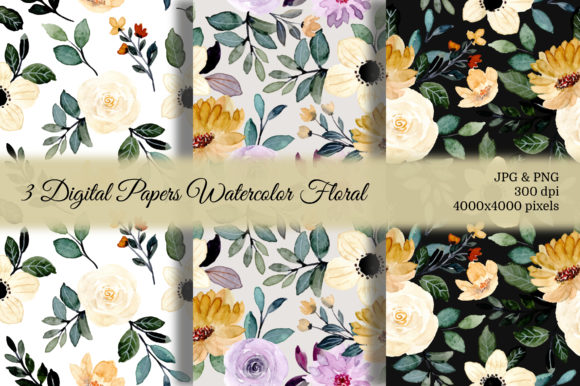
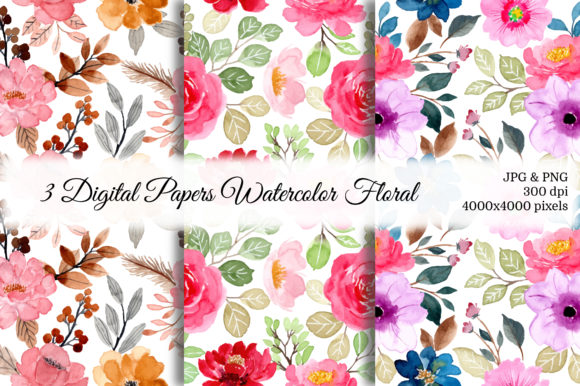
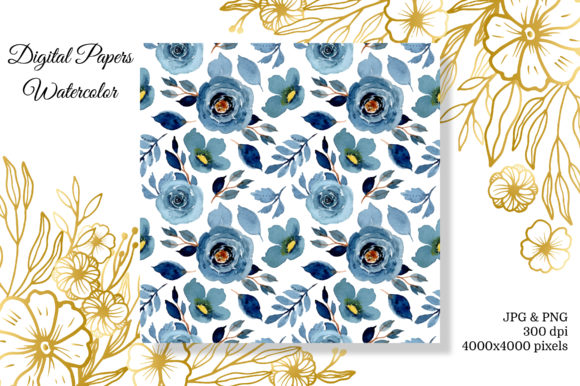
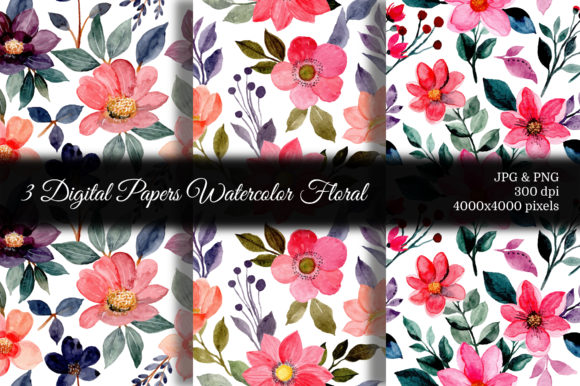
Understanding where this asset fits requires looking beyond the visual appeal of watercolor florals. The true value lies in the specifications: 4000×4000 pixel dimensions at 300 DPI, provided in both JPG and PNG formats. These parameters are not arbitrary; they are industry standards that dictate how the asset can be manipulated, printed, and distributed. When integrated correctly, these patterns reduce friction during the design phase, allowing creators to focus on layout and messaging rather than troubleshooting resolution issues or fixing broken tile edges.
Technical Specifications and Workflow Compatibility
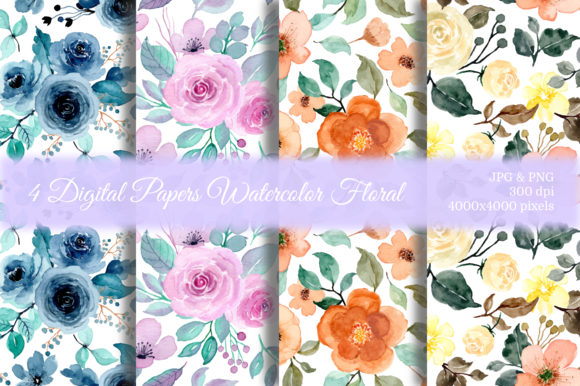
The inclusion of four seamless patterns in both JPG and PNG formats addresses distinct needs within a creative ecosystem. The JPG files with white backgrounds are optimized for speed and compatibility. They serve as excellent base layers for print projects where opacity is not a concern, such as stationery design, book covers, or textile printing. Because they retain a solid white foundation, they integrate seamlessly into CMYK color spaces without requiring complex masking or blending mode adjustments. This makes them ideal for the initial drafting phase or for projects with tight turnaround times where file size and processing speed matter.
Conversely, the PNG files with transparent backgrounds unlock advanced compositing capabilities. In digital workflows involving web design, social media graphics, or layered packaging mockups, transparency is essential. These files allow the floral elements to float over colored backgrounds, gradients, or photographic textures without the harsh boundaries of a white box. For educators creating course materials or entrepreneurs designing branded merchandise, the PNG format provides the flexibility to adapt the pattern’s mood simply by changing the underlying layer color. This duality ensures that the asset remains useful across different software environments, from Adobe Illustrator and Photoshop to Canva and Procreate.
The resolution of 4000×4000 pixels at 300 DPI is a critical factor for quality control. In professional printing, maintaining 300 DPI is non-negotiable for crisp output. This resolution allows for significant scaling; designers can crop into specific floral details for accent graphics or scale the pattern down for subtle texturing without losing fidelity. For digital-only applications, this high resolution future-proofs the asset against evolving screen technologies, ensuring clarity on Retina displays and large-format monitors. This technical baseline eliminates the risk of pixelation, a common failure point when using lower-quality stock assets in professional deliverables.
Strategic Application Across Project Phases
Seamless Pattern Floral Watercolor 28 can be leveraged at multiple touchpoints in a project lifecycle. During the planning and ideation phase, these patterns act as mood setters. Rather than starting with a blank canvas, applying a low-opacity version of the pattern can help establish a visual tone early in the process. This is particularly useful for branding projects where the client needs to feel the "texture" of the brand before typography and logo placement are finalized. The watercolor aesthetic inherently communicates softness, craftsmanship, and organic growth, which can guide subsequent design decisions regarding font pairing and color palette selection.
During the execution phase, the seamless nature of the tiles becomes the primary operational advantage. Seamless tiling allows for infinite expansion without visible repetition lines. For web developers and UI designers, this means creating CSS backgrounds that load efficiently while covering any viewport size. For print designers working on variable-sized products like wrapping paper or fabric bolts, it removes the guesswork from pattern matching. The ability to fill large areas instantly accelerates production, freeing up mental bandwidth for refining custom illustrations or adjusting typographic hierarchy.
In the post-production and marketing phase, these assets extend the life of the core project. A packaging designer might use the full pattern for the box but extract individual floral elements from the PNG files for social media teasers, email newsletter headers, or thank-you cards included in the shipment. This creates visual consistency across customer touchpoints without requiring new illustration work. For content creators and bloggers, having a library of cohesive background textures streamlines the creation of Pinterest pins and Instagram stories, ensuring that all published content feels part of a unified visual system.
Optimizing File Management and Asset Organization
Efficiency extends beyond the canvas to how assets are stored and retrieved. With eight total files (four JPG, four PNG), proper organization prevents workflow bottlenecks. Professionals should implement a consistent naming convention immediately upon download. Renaming generic files to descriptive tags such as FloralWatercolor28_BluePeony_4k_PNG.png facilitates faster searching within digital asset management systems or operating system search functions. Storing these files in cloud-synced folders ensures accessibility across devices, allowing a freelancer to start a concept on a tablet and finalize it on a desktop workstation without manual file transfers.
Version control and backup strategies are equally important. While the source files are high resolution, working copies should be optimized for the specific task at hand. Creating proxy files or smart objects in design software helps maintain program performance while keeping the link to the original 4000px master intact. This practice preserves the integrity of Seamless Pattern Floral Watercolor 28 for future high-quality outputs while preventing lag during active editing sessions. Additionally, documenting license terms and usage rights alongside the files protects businesses from compliance issues down the line, especially when assets are shared among team members or contractors.
Enhancing Usability Through Customization
To maximize return on investment, users should view these patterns as raw material rather than finished products. Several practical techniques can adapt the base assets to specific project requirements:
- Color Grading: Use adjustment layers in Photoshop or hue/saturation tools in vector software to shift the floral tones to match specific brand guidelines. The watercolor texture responds well to color overlays, allowing for seasonal variations without redrawing.
- Scale Manipulation: Experiment with non-uniform scaling. Stretching the pattern horizontally or vertically can create an abstract, modern effect that retains the organic feel while reducing visual recognizability, making it suitable for corporate contexts where traditional florals might seem too ornate.
- Blending Modes: Combine the PNG transparent versions with grain textures, paper scans, or geometric grids. Using Multiply, Overlay, or Soft Light blending modes integrates the florals into complex compositions, adding depth and tactile quality that flat digital designs often lack.
- Selective Masking: Use the seamless pattern as a texture mask within typography or shapes. This technique embeds the floral detail directly into logos or headlines, creating a bespoke look that ties the background and foreground elements together cohesively.
Quality Control and Output Considerations
Before finalizing any project utilizing these assets, rigorous quality checks are necessary. For print workflows, always verify the effective PPI after scaling. If a 4000px image is stretched to cover a 20-inch area, the resolution drops to 200 DPI, which may appear soft in close inspection. Understanding this mathematical relationship prevents costly reprint errors. Digital workflows require different validation; test patterns across multiple browsers and devices to ensure that CSS tiling behaves predictably and that file sizes do not negatively impact page load speeds. Compressing web-ready versions while retaining the master files balances aesthetic quality with user experience performance.
Consistency is another pillar of professional implementation. When using Seamless Pattern Floral Watercolor 28 across a suite of materials, ensure that lighting direction and color temperature remain uniform. Mixing patterns from different collections can sometimes result in visual dissonance due to varying brush styles or shadow angles. By sticking to a curated set or carefully adjusting disparate elements to share a common light source, creators maintain a polished, intentional appearance. This attention to detail distinguishes professional work from amateur assembly and builds trust with audiences who subconsciously associate visual coherence with organizational competence.
Ultimately, the successful integration of digital papers and seamless patterns depends on treating them as functional components of a larger system. Whether used to expedite prototyping, enhance brand storytelling, or streamline production, Seamless Pattern Floral Watercolor 28 offers a reliable foundation for diverse creative endeavors. By respecting technical specifications, organizing assets logically, and applying thoughtful customization, professionals can transform these static images into dynamic tools that support both artistic vision and business objectives. The goal is not just to apply a pattern, but to embed it so naturally into the workflow that it enhances the final outcome without drawing undue attention to the mechanics of its creation.